
Why You Keep Waking Up With a Stiff Neck (And Why Your Pillow Is Probably to Blame)
A look at the overlooked reason millions wake up sore, and what sleep posture specialists say is really going on.

If you wake up most mornings with a stiff, aching neck, a dull headache, or that familiar knot between your shoulder blades, you have probably blamed a lot of things. Your age. Your mattress. The way you "must have slept funny." Stress. Too long at the desk.
You are not wrong to suspect those things. But there is one cause that sits quietly underneath nearly all of them, and most people never think to question it. It is the one thing your head rests on for roughly a third of your life, every single night, while you are completely unable to do anything about it.
Your pillow.
Not pillows in general. The wrong pillow. And the uncomfortable truth, according to a growing understanding of sleep posture, is that the pillow most people reach for to fix their neck pain is often quietly making it worse.
The problem starts long before you fall asleep
To understand why, you have to understand what your neck is actually doing all day.
Your head weighs around five kilograms. That is roughly the weight of a bowling ball, balanced at the top of your spine and held in place by the muscles and ligaments of your neck. Your cervical spine, the top section of your backbone, is not straight. It has a gentle inward curve, and that curve exists to keep that heavy head balanced with as little muscular effort as possible.
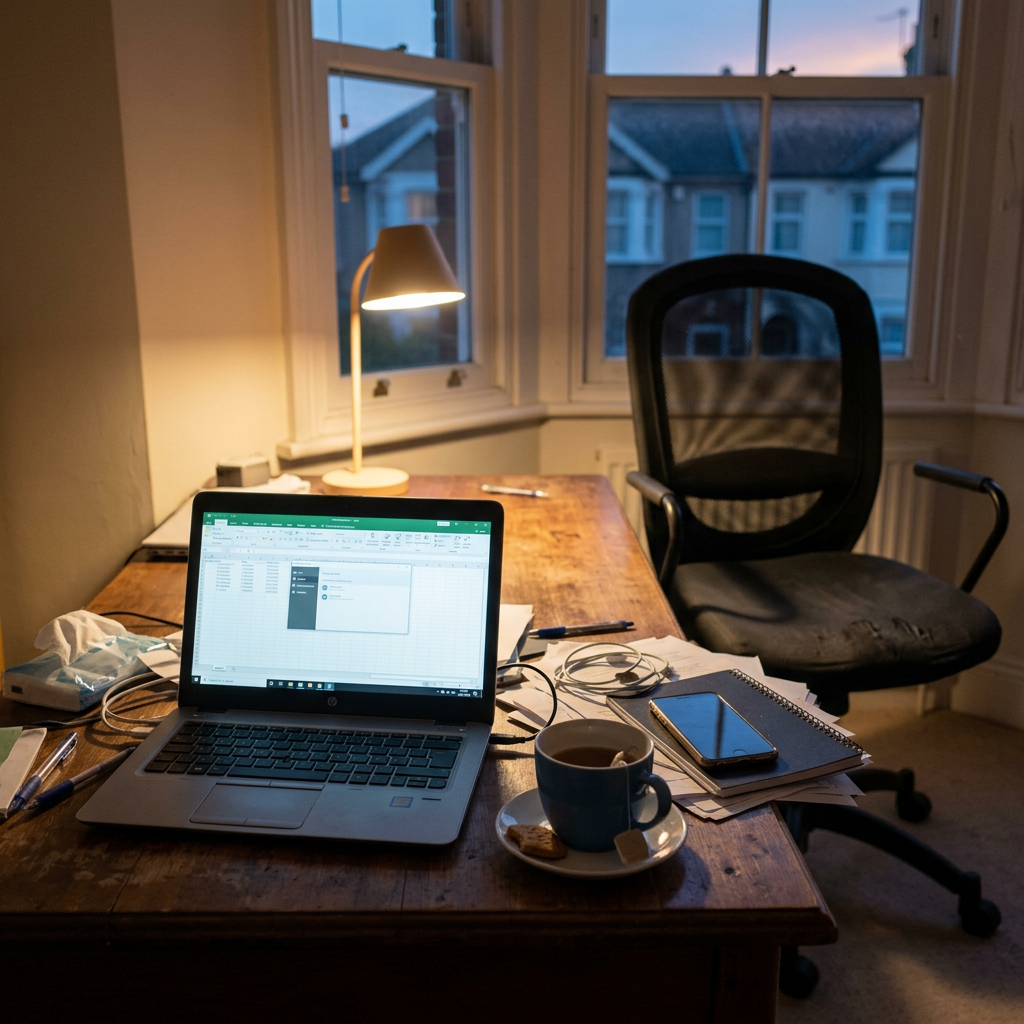
Now think about how you spend your waking hours. Hunched over a laptop. Looking down at your phone. Sitting at a desk for six, eight, ten hours at a stretch. Every degree you tilt your head forward multiplies the load on your neck. Clinicians have a name for the modern version of this strain, "tech neck," and if you spend most of your day in front of a screen, your neck muscles are already tight and overworked long before you get into bed.
Here is what most people get wrong. They assume the night is when the neck finally gets to rest and recover.
For a lot of people, it is the opposite.
What is really happening while you sleep
When you lie down, a gap opens up. Between the base of your skull, the curve of your neck, and the surface of the bed, there is a hollow space that needs to be filled to keep your spine in a neutral, straight line. Sleep posture specialists describe the ideal as your head, neck and spine forming one continuous line, with your ears roughly level with your shoulders, whether you are on your back or your side.
A pillow has one real job: to fill that gap perfectly, so the muscles around your neck can finally switch off and recover.
Most pillows fail at it.
A soft, flat or worn-out pillow lets your head sink down, dropping it below the line of your spine and stretching the muscles on one side of your neck all night long. A pillow that is too thick or too firm shoves your head up too high, kinking your neck the other way. Either way, the gap is not filled correctly, your cervical curve is pushed out of its natural position, and the muscles and ligaments that were supposed to be resting spend the whole night gently straining to hold your head in an unnatural angle.
This is the part almost nobody realises. You do not wake up stiff because you slept badly. You wake up stiff because, for seven or eight hours, your neck never actually stopped working. It clocked in for a night shift you did not know it was doing, and you wake up feeling like you have already been awake for hours, because in a sense, your neck has.
That is also why the pain is so often worst in the morning and eases a little as the day goes on. You spend all day loading the neck, then all night straining it. It never gets the window to recover that it is supposed to. The damage is being done overnight, by the very thing that is supposed to be helping you.
Musculoskeletal Physiotherapist
Why "just buying a better pillow" usually disappoints
At this point, most people do the logical thing. They go and buy a new pillow. Maybe a memory foam one. Maybe an orthopaedic or "cervical" pillow with a fancy contour. And for a few nights, it might even feel like progress.
Then the disappointment sets in, and it tends to follow the same handful of patterns every time.
Some pillows are simply too firm. They arrive rock solid, your head never settles, and you spend the night feeling like you are resting on a brick. Others are the opposite, far too soft or too thin, so within weeks they have flattened into something you might as well replace with a folded sheet. Many memory foam pillows trap heat, leaving you flipping to the cool side every couple of hours. Some arrive with a chemical smell strong enough to give you a headache before they have had a chance to help anything.
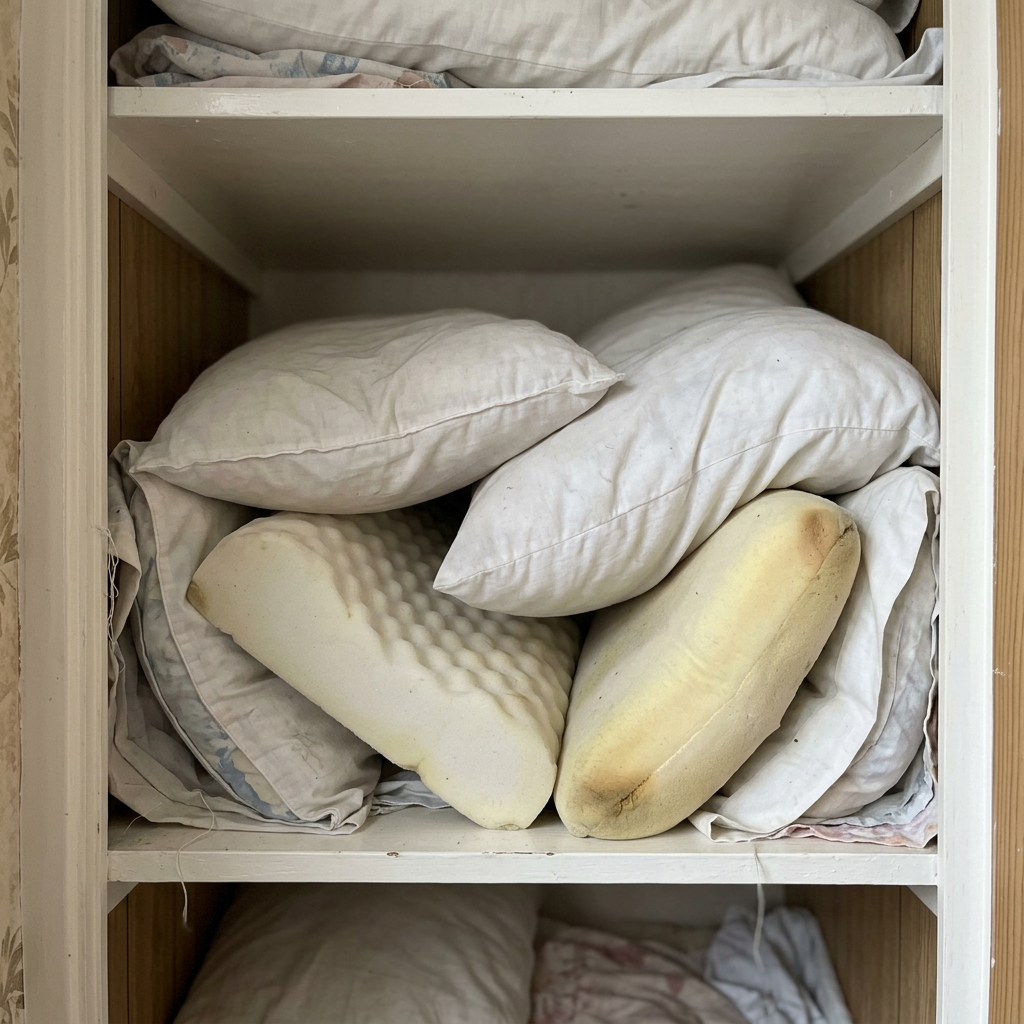
But the most common failure is more subtle, and it is the one almost no pillow on the market honestly addresses.
Most contoured pillows are designed for one sleeping position. They might genuinely support you when you lie on your back, holding that perfect neutral line. But the moment you roll onto your side, the height that was perfect a second ago is now wrong. Your shoulder gets crushed, your head tips, and your neck is bent out of line again. For the huge number of people who move between their back and their side through the night, a single-position pillow means you are correctly supported for part of the night and quietly strained for the rest of it.
So the pillow gets demoted to the spare room, the neck pain comes back, and you draw the conclusion that so many people eventually reach: maybe nothing will work. Maybe this is just my neck now. Maybe it is my age.
It is worth saying clearly, because it is the most important part of this whole story: that conclusion is almost always wrong. The problem is rarely that your neck is beyond help. The problem is that almost nothing you have tried was actually designed to do the one thing that matters, which is to hold your neck in its natural position no matter how you sleep, and to keep doing it night after night without going flat, getting hot, or giving up after a week.
Which raises the obvious question. What would a pillow actually have to do to get that right?
The one design feature most pillows overlook
If a pillow's real job is to fill the gap under your neck and hold your spine in one neutral line, then the failure of most pillows comes down to a single oversight: they are built for one position, one height, one shape of sleeper. Real people are not that tidy. You drift onto your back, roll to your side, shift again before morning. The support that was right at 11pm is wrong by 1am.
Solving that means rethinking the pillow not as a single cushion, but as a set of zones, each doing a different job for the way you actually move through the night. That is the idea behind CerviLux.
How CerviLux holds the line all night
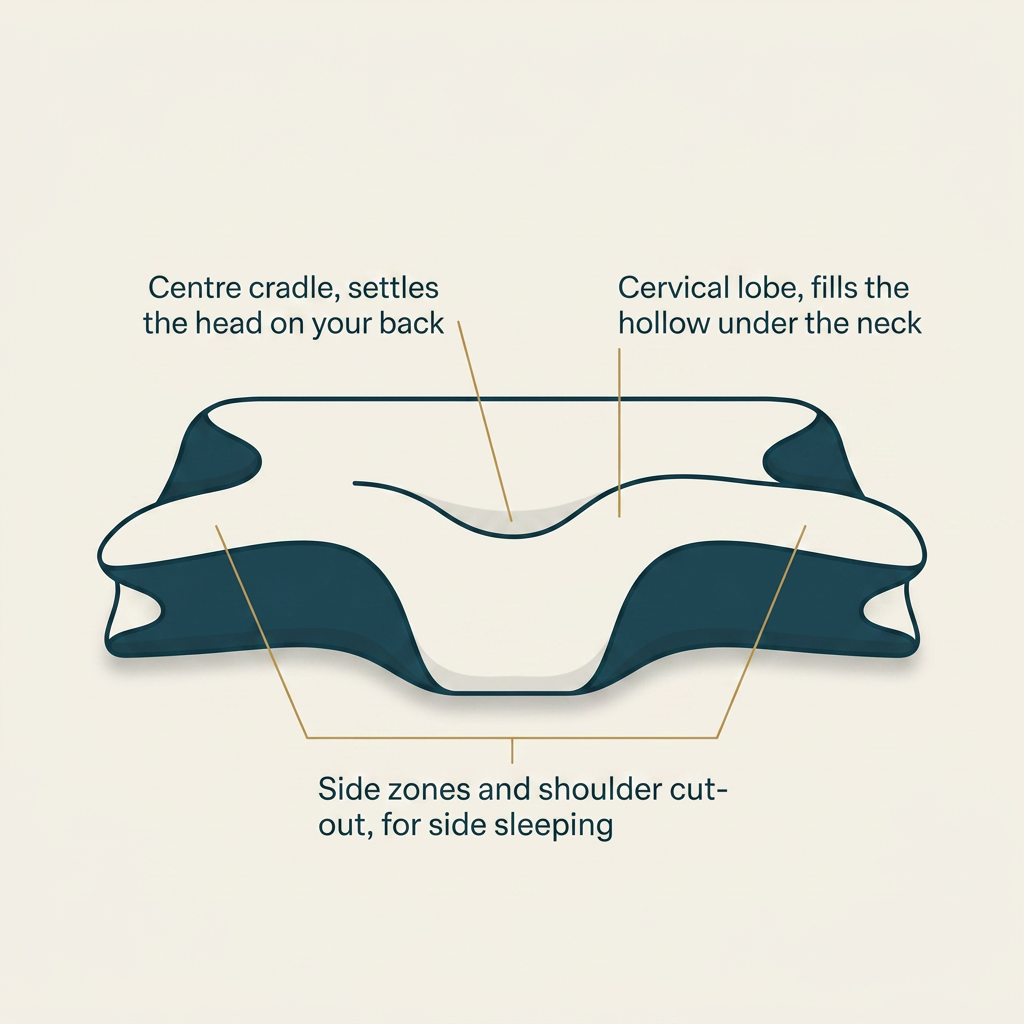
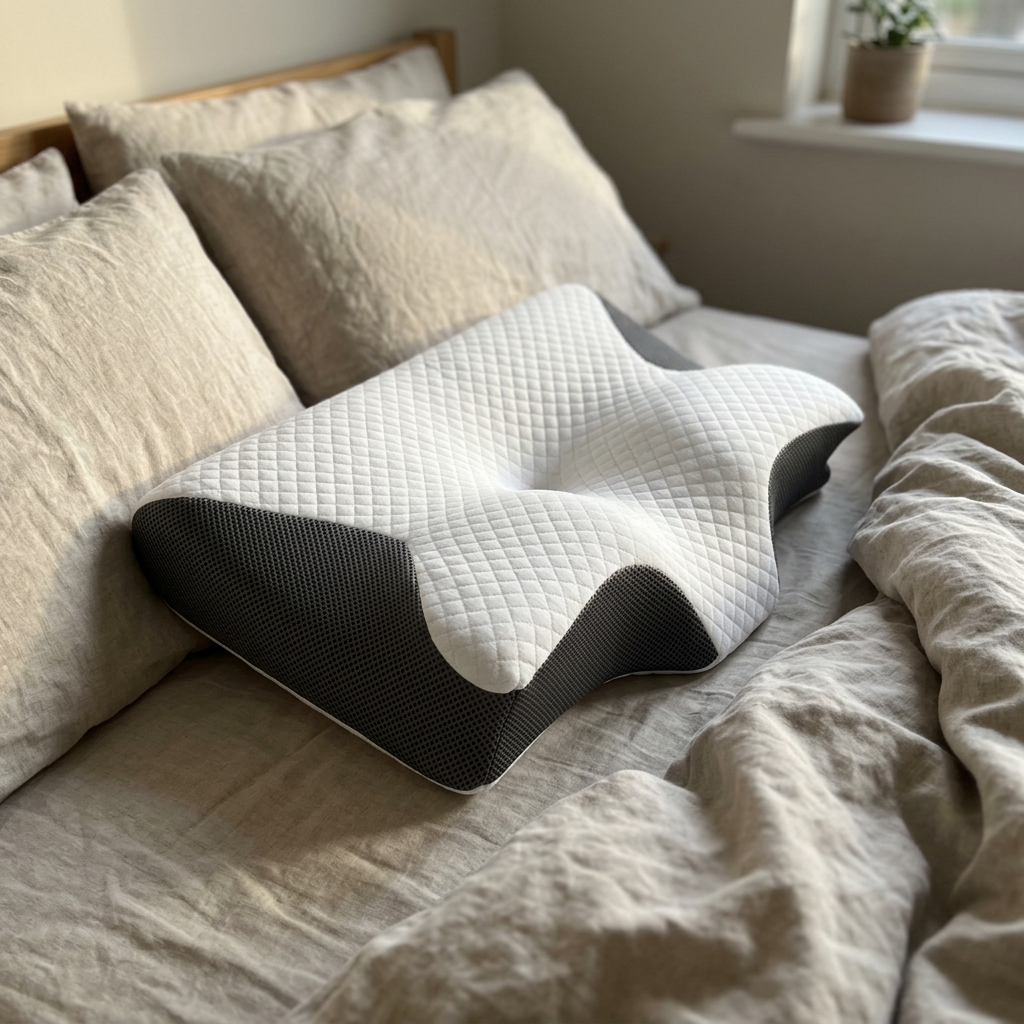
CerviLux is an ergonomic memory foam cervical pillow built around what we call the Tri-Zone Contour. Instead of one flat surface, it is shaped into three working areas that keep your neck in its natural position no matter how you sleep.
- 1The centre cradleA gently lowered hollow that lets your head settle to the right depth on your back, rather than propping it up too high.
- 2The cervical lobeA raised ridge that fills the hollow under your neck, supporting that natural curve so the muscles around it can finally let go.
- 3The side zonesHigher edges with a shoulder cut-out that fill the larger gap when you are on your side, so your head stays level and your shoulder is cradled instead of crushed.
The result is simple to feel and hard to find anywhere else. Lie on your back and your head is held in a neutral line. Roll onto your side and the higher edge takes over, keeping your spine straight from your shoulders to the crown of your head. You are supported in the position you fall asleep in, and still supported in the one you wake up in.
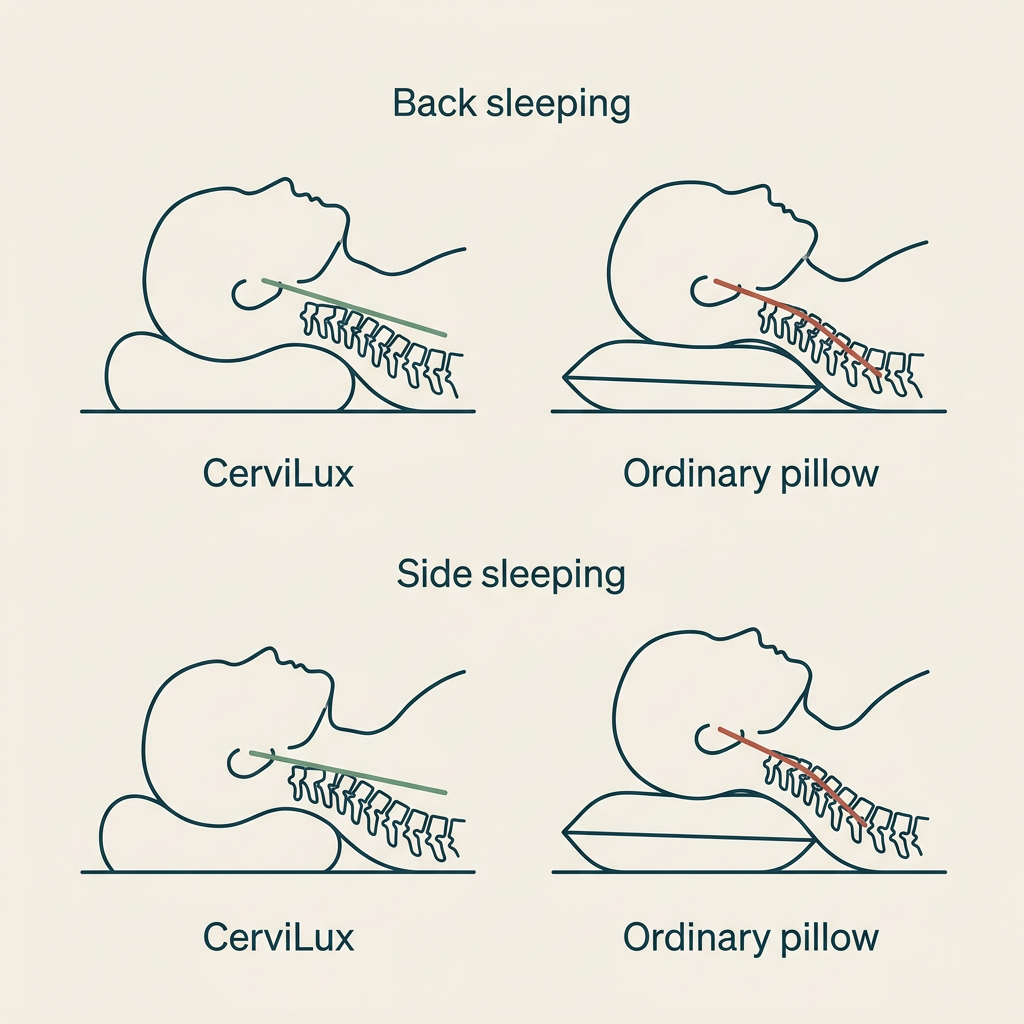
It is made from slow-rebound memory foam, the kind that moulds slowly to the exact shape of your head and neck and then holds it, rather than springing back or flattening out. That is what lets it keep doing its job at 4am as well as it did at midnight. And it gives that overworked, screen-strained neck the one thing the day never offers it: a full stretch of hours in a position where it can finally let go.
The things that ruined your last pillow, handled
Getting the shape right is only half the battle. The other half is everything that quietly turns a promising pillow into the one in the spare room. So those failures were designed out from the start.
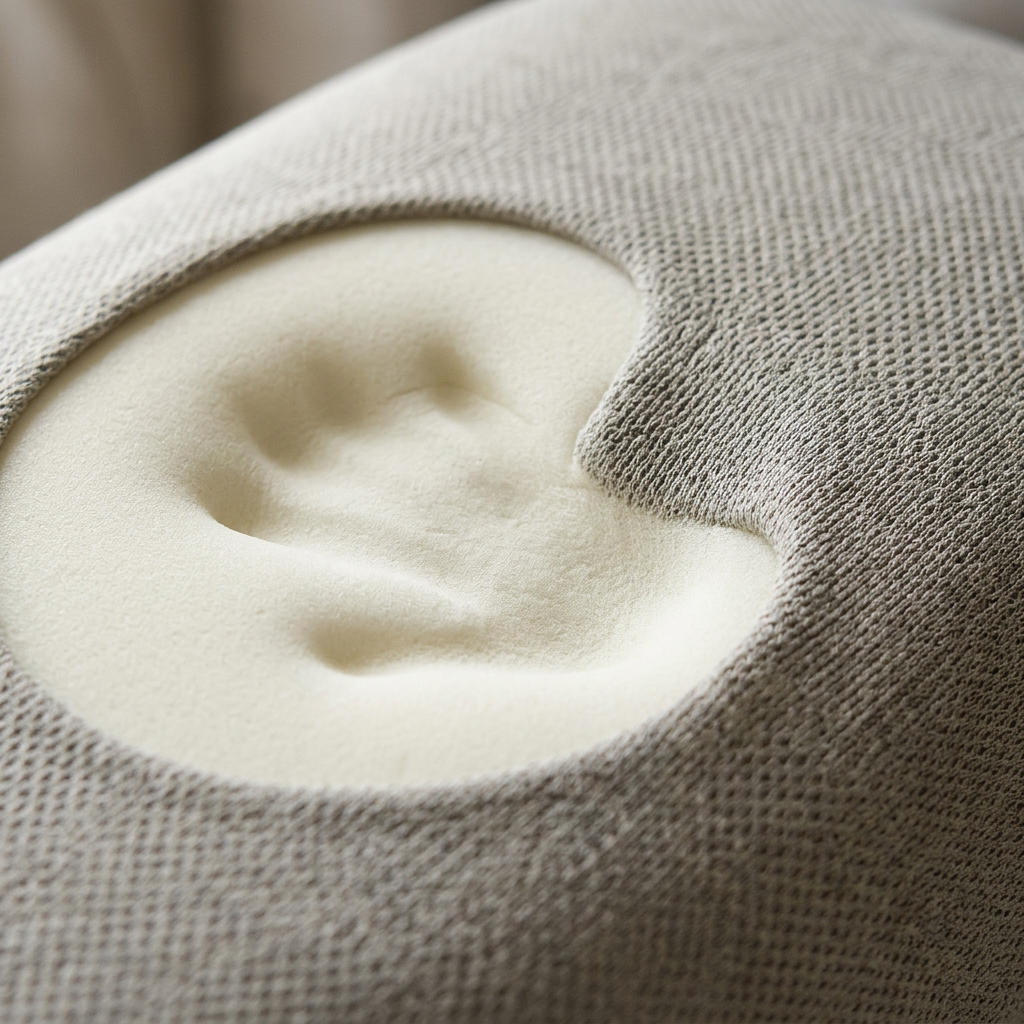
The breathable cover is designed to promote continuous airflow, helping you stay cool and comfortable throughout the night without constantly searching for the cool side of the pillow. Made from high-density slow-rebound memory foam, it gently adapts to your shape while providing consistent support night after night. Unlike ordinary pillows that flatten and lose their structure over time, it is engineered to maintain its shape and performance for long-lasting comfort and support.
What you are actually getting
What it is like to actually sleep on
- Wake up without that first-thing-in-the-morning stiff, locked-up neck
- Stay supported whether you fall asleep on your back or your side
- Stop the nightly ritual of folding and stacking pillows to find a bearable angle
- Keep cool through the night instead of flipping to the cold side
- Have a pillow that still holds its shape months from now, not weeks
What the people who tried it actually say
We will be straight with you. The people CerviLux was built for are the hardest to win over, because they have heard every promise before. So rather than tell you it works, here is the space where real customers tell you, in their own words.
What to honestly expect in the first two weeks
Here is the part most brands will not tell you, and it matters.
If your neck has spent years being held at the wrong angle every night, the right angle can feel unfamiliar at first. For the first few nights, a properly supportive pillow can feel different, even a little strange, simply because your muscles are being asked to rest in a position they are not used to. This is normal. Sleep specialists generally note that the body takes around two weeks to fully adapt to a new sleeping alignment.
This is exactly why so many people abandon a good pillow too early, give up in the first few nights, and conclude it "did not work." The ones who give it a fortnight are usually the ones who end up saying they would never go back. So give it the two weeks. Your neck has waited this long.
See CerviLux and today's offer Backed by our 90-night sleep trial and free UK deliveryTry it for yourself, with the risk on us
We know how this sounds, because the people CerviLux was built for have heard every promise before. Most have a drawer full of pillows that did not live up to them. Scepticism is the sensible response to a market full of big claims.
So rather than ask you to take our word for it, the better test is your own bed. Sleep on CerviLux, through the adjustment period and out the other side, and judge it by one thing: how you feel when you wake up.
Choose your CerviLux
- 1 free ice silk pillowcase (worth £27.95)
- Free Sleep Better guide (worth £29)
- Free UK delivery
- 2 free ice silk pillowcases (worth £55.90)
- Free Sleep Better guide (worth £29)
- Free UK delivery
You have 90 nights to try it, with zero risk
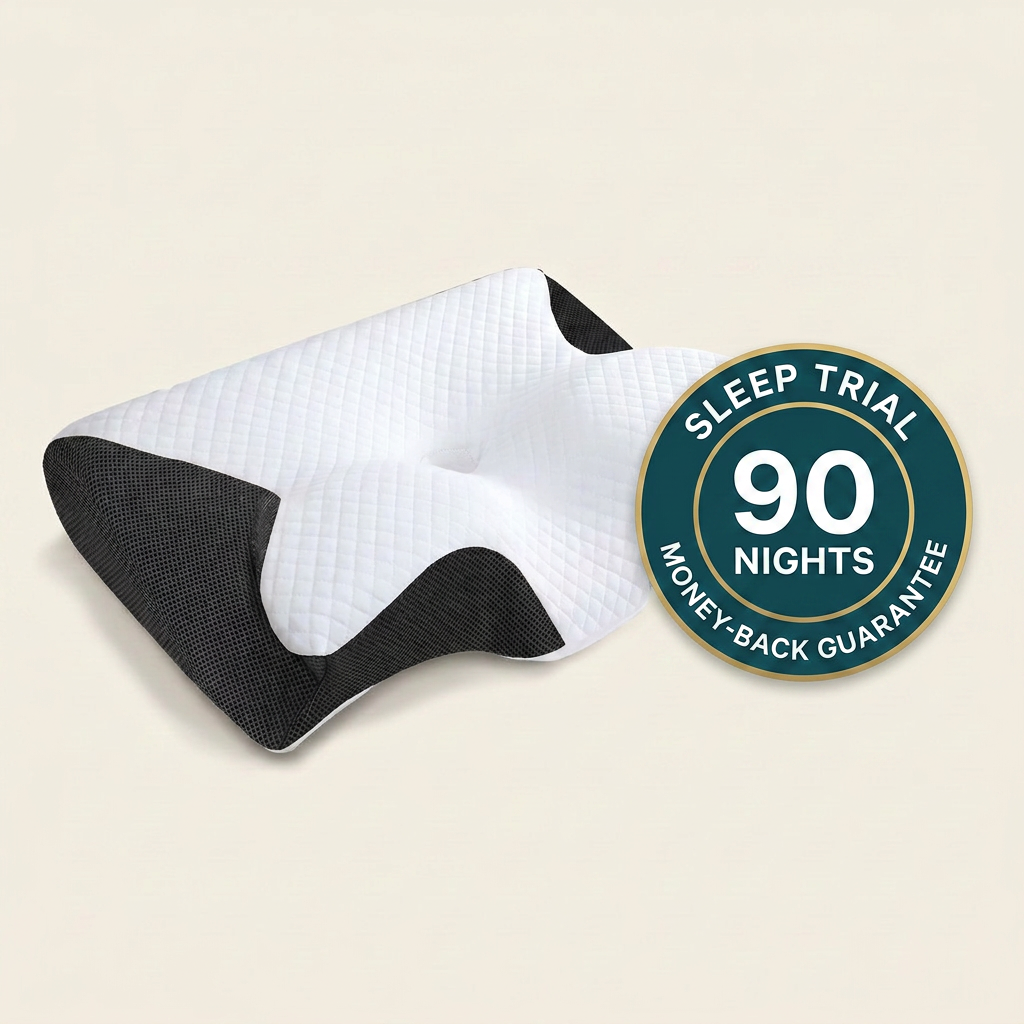
Sleep on it for a full 90 nights. If it is not the difference you were hoping for, just let us know and you will get your money back. The only thing you have actually risked is one more night on the pillow that has been letting you down all along.
This is not just about the pillow
Option 1
Carry on as you are. Another morning of waking up stiff, reaching for the painkillers, blaming your age, and telling yourself this is just how it is now.
Option 2
Give your neck one fortnight on a pillow actually built to hold it in line, with the risk on us, and judge it by how you feel when you wake up.
Because that is the real choice here. Not CerviLux versus some perfect solution, but CerviLux versus another morning exactly like the last one. It does not have to be that way, and right now is the easiest time to find out.
See CerviLux and today's offer Up to 50% off plus free UK delivery
Comments
COMMENTS SLOT: connect a genuine comments or reviews widget here. Leave empty rather than inventing a thread. Fabricated comments are fake testimonials and are illegal in the UK.